Cosmetic surgery can transform how you look, but the results you see in the mirror depend heavily on how well your body heals underneath the surface. Whether it’s liposuction, a tummy tuck, breast surgery, or a body contouring procedure, the weeks after surgery are just as important as the procedure itself.
This is where physiotherapy plays a role that most people underestimate — it isn’t just for sports injuries or joint replacements, it’s a critical part of recovering safely and smoothly from cosmetic procedures too.
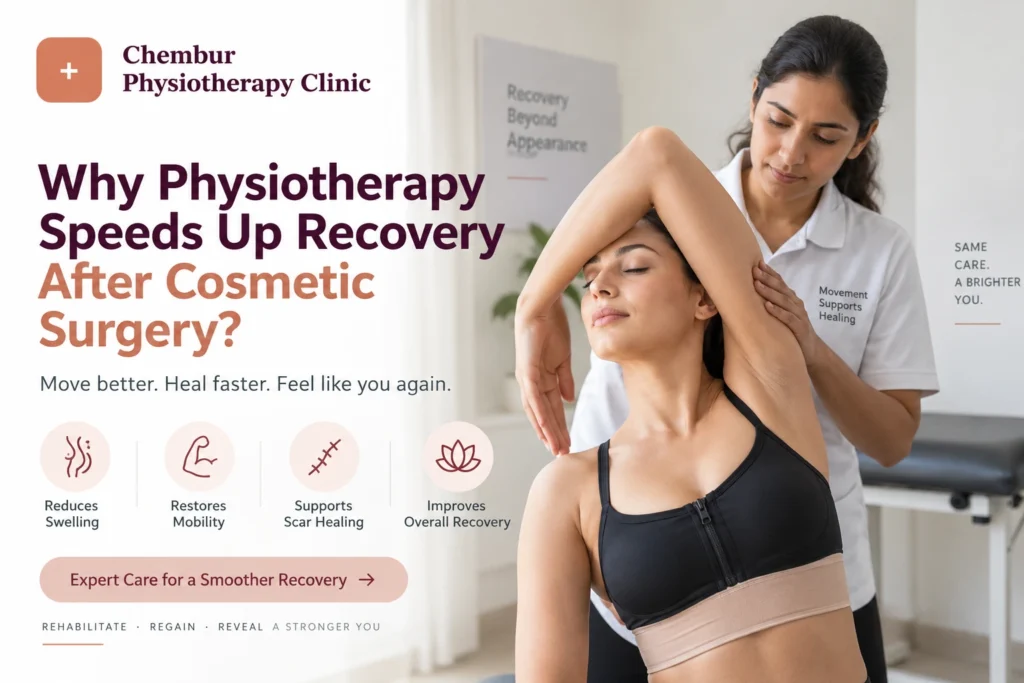
The Hidden Challenges After Cosmetic Surgery
Most people assume that once the surgery is done, recovery is simply a matter of rest and time. In reality, the body goes through several changes after a cosmetic procedure that can slow healing if left unmanaged:
- Swelling and fluid buildup around the treated area
- Scar tissue formation that can restrict movement if not addressed early
- Reduced mobility and stiffness from limited movement during initial recovery
- Muscle weakness in areas that haven’t been used much post-surgery
- Risk of poor posture as the body compensates for discomfort
Left unaddressed, these issues can lead to longer recovery times, visible scarring, or reduced range of motion. This is exactly where a structured, guided physiotherapy programme makes a measurable difference.
How Physiotherapy Supports Faster, Safer Healing?
1. Reduces Swelling and Improves Circulation
Manual lymphatic drainage and gentle mobilisation techniques help move excess fluid away from the surgical site. Better circulation means the tissues receive more oxygen and nutrients, which directly speeds up the natural healing process.
2. Prevents Stiff, Restrictive Scar Tissue
As wounds heal, the body naturally forms scar tissue. Without early, guided movement, this tissue can become thick and tight, pulling on the skin and limiting flexibility. A physiotherapist uses targeted techniques to keep scar tissue soft and mobile, so it doesn’t restrict your movement later on.
3. Restores Strength and Range of Motion Gradually
After any surgery, muscles around the treated area tend to weaken from lack of use. A physiotherapist designs a progressive exercise plan — starting with the gentlest movements and building up — so you regain strength without putting stress on healing tissue too soon.
4. Corrects Posture and Movement Compensation
It’s common to unconsciously favour one side of the body or adopt awkward postures to avoid discomfort after surgery. Over time, this can create new problems like back or neck pain. Physiotherapy helps correct these compensatory patterns before they become long-term habits.
5. Lowers the Risk of Complications
Structured movement, breathing exercises, and circulation-focused techniques can help lower the risk of complications such as blood clots and prolonged inflammation, both of which are more likely when the body stays inactive for too long after surgery.
What a Post-Cosmetic Surgery Physiotherapy Plan Looks Like?
Every recovery plan should be tailored to the specific procedure and the individual’s healing pace, but a typical programme usually includes:
- An initial assessment to understand the surgery, the surgeon’s recovery guidelines, and any restrictions
- Gentle manual therapy to manage swelling and support tissue healing
- Scar mobilisation techniques introduced once the wound has sufficiently healed
- A gradual, progressive exercise programme to rebuild strength and flexibility
- Posture correction and movement re-education
- Ongoing monitoring to adjust the plan as recovery progresses
Because many patients aren’t comfortable travelling soon after a cosmetic procedure, this kind of rehabilitation is often best delivered through home visit physiotherapy for post-surgery recovery, allowing you to begin your recovery in a comfortable, familiar environment without the added stress of commuting.
When Should You Start Physiotherapy After Cosmetic Surgery?
Timing matters. Starting too early can interfere with healing, while waiting too long can allow stiffness and scar tissue to set in. In most cases, your surgeon and physiotherapist will coordinate to determine the right stage to begin — often within the first couple of weeks, once initial swelling has started to settle and the surgeon has given clearance for gentle movement.
Conclusion
Cosmetic surgery is a significant physical event for the body, and how you support it afterward has a direct impact on your final results, comfort, and how quickly you return to your everyday routine. Physiotherapy bridges the gap between “surgery is done” and “I feel fully like myself again” — addressing the parts of recovery that rest alone simply can’t fix.
If you’re preparing for or recovering from a cosmetic procedure, working with a physiotherapist isn’t an optional extra — it’s an investment in a smoother, faster, and more comfortable recovery.
Chembur Physiotherapy offers guided, personalised post-surgery rehabilitation programmes designed to help you heal safely and regain confidence in your body, faster.