An anterior cruciate ligament (ACL) tear is one of the most common serious knee injuries among people who play cricket, football, badminton, basketball or simply lead an active life. Once you and your surgeon decide on reconstruction, the next question is almost always the same: how long will it take to get back to normal? The honest answer is that the operation itself is only the beginning. Most of your recovery happens afterwards, through carefully guided physiotherapy over many months.
This guide walks you through a typical ACL surgery recovery timeline, week by week and phase by phase, so you know what to expect and what your physiotherapist will be working on at each stage. Every recovery is different, and your surgeon’s protocol always comes first, so treat the timings below as a general roadmap rather than a strict calendar.
Before Surgery: The Case for Preparation
Recovery actually begins before you enter the operating theatre. A knee that is swollen, stiff and weak going into surgery tends to recover more slowly than one that has been prepared. In the weeks before the operation, physiotherapy focuses on reducing swelling, regaining full knee straightening and bending, and strengthening the thigh and hip muscles. You will also learn the exercises and the crutch technique you will need immediately afterwards, which makes the first days far less stressful.
Week 1: Protecting the Knee and Calming Swelling
The first week is about protection and comfort. The knee will be swollen and sore, and you will usually walk with crutches and, depending on your surgeon, a brace. Physiotherapy at this stage is gentle and focuses on controlling swelling with elevation and cold therapy, waking up the quadriceps muscle with simple contractions, and starting early movement of the knee within the comfortable range.
The two goals that matter most right now are getting the knee fully straight and regaining the ability to lift the leg without it dropping. Do not be alarmed if the thigh muscle feels as though it has switched off. This is normal after surgery and improves quickly with the right exercises.
Weeks 2 to 6: Restoring Movement and Normal Walking
As the initial pain settles, the focus shifts to movement. Your physiotherapist will work on increasing knee bending, improving the mobility of the kneecap and gradually restoring a normal walking pattern. Most people progress from two crutches to one and then to walking without support, as strength and control allow and as your surgeon permits.
Exercises during this phase include heel slides, stationary cycling with light resistance, mini squats within a limited range and exercises to strengthen the hips and calves. Swelling can flare up if you do too much too soon, so the rule is simple: if the knee becomes puffier or hotter after activity, you have done more than it is ready for.
Some patients also find that the stiffness in these weeks is the hardest part. Regular guided sessions at a clinic offering dedicated post-surgery rehabilitation help you keep progressing safely without pushing the graft too hard.
Weeks 6 to 12: Building Strength and Control
By around six weeks, most people have good knee movement and walk without a limp, and the programme turns towards strength. The graft is still maturing during this period, so progression is deliberate. Exercises become more demanding, with leg presses, step-ups, controlled squats, hamstring strengthening and balance training on one leg.
Balance and body awareness matter as much as raw strength here. After an ACL injury, the knee often loses part of its natural ability to sense position, so exercises on unstable surfaces and single-leg control drills retrain the knee to protect itself. Everyday life in Mumbai places its own demands on a recovering knee, from climbing stairs and stepping on and off local trains to sitting on the floor, so your physiotherapist will practise these specific movements with you before you face them in real life.
Months 3 to 4: Introducing Impact and Straight-Line Running
Somewhere between the third and fourth month, and only when you meet certain strength and control benchmarks, running may begin. Typically this starts with walk-and-jog intervals on a flat surface or treadmill, which build up slowly over several weeks. Rushing this step is one of the commonest mistakes, because the knee can feel great long before the graft and the surrounding muscles are truly ready.
At this stage, a proper biomechanical assessment is especially useful. Studying how you land, squat and change direction can reveal habits, such as the knee collapsing inwards, that raise the risk of reinjury and can be corrected before they become ingrained.
Months 4 to 6: Advanced Strengthening and Athletic Conditioning
With running established, the programme becomes more athletic. You will add jumping and landing drills, lateral movements, plyometric exercises and heavier strength work, always with attention to how the knee lines up when it takes load. Hamstring and glute strength are given particular attention because they help protect the new graft.
This is also the phase where structured strength and conditioning work pays off, rebuilding the muscle bulk, power and endurance that were lost during the months of reduced activity. Many people feel almost normal during this period, which is exactly why discipline matters. Feeling well is not the same as being ready for sport.
Months 6 to 9: Sport-Specific Training
From around six months onwards, rehabilitation becomes specific to what you want to return to. A footballer practises cutting, turning and ball work, a cricketer rehearses sprinting between the wickets, diving and throwing, and a badminton player works on lunges and rapid direction changes. Drills begin in a controlled way and gradually become faster, less predictable and closer to match conditions.
Objective testing becomes very important now. Your physiotherapist will usually measure the strength of the operated leg against the other leg, along with hop tests and movement quality. Modern guidance increasingly favours meeting these criteria rather than simply counting months, because passing them is linked to a lower risk of reinjury. If you are returning to competitive play, dedicated ACL rehabilitation for sports will tailor these final stages to your game.
Months 9 to 12 and Beyond: Returning to Full Sport
Most athletes are cleared for full, unrestricted sport somewhere between nine and twelve months after surgery, and many benefit from waiting towards the longer end of that range, especially for pivoting and contact sports. Research has shown that returning too early significantly increases the chance of tearing the graft or injuring the other knee.
Even after clearance, the work does not stop. A maintenance routine of strength, balance and landing control exercises continues to protect the knee for years. Think of it as part of your training, not as something you finish with at the end of rehab.
Factors That Can Change Your Timeline
Several things can make your own recovery faster or slower than the standard roadmap. The type of graft used, whether the meniscus was repaired at the same time, your age, your fitness before the injury and how consistently you attend sessions and complete your home exercises all play a part. A meniscus repair, for instance, usually means a more cautious early phase with limits on weight-bearing and bending. This is why you should always follow the specific instructions from your surgeon and physiotherapist rather than comparing your progress with a friend’s.
Common Mistakes to Avoid
The most frequent problems seen during ACL recovery are very predictable. Some people skip physiotherapy once the pain disappears, others push into running or sport too soon, and many neglect the early goal of full knee extension. Skipping the home exercises is another common error, since the clinic sessions alone are not enough. Steady, patient progress consistently beats early enthusiasm.
When to Contact Your Doctor?
Seek medical advice promptly if you notice increasing redness, heat or discharge around the wounds, a fever, severe calf pain or swelling, a sudden increase in knee swelling or a feeling that the knee is giving way. These can signal infection, a blood clot or a problem with the repair, and they should not wait for your next therapy session.
Conclusion
Recovering from ACL surgery is a marathon rather than a sprint. By following a phased programme that protects the graft early, restores movement, builds strength, retrains control and gradually returns you to sport, you give your knee the best chance of staying strong for the long term. Patience in the early months is what makes confidence in the later ones possible.
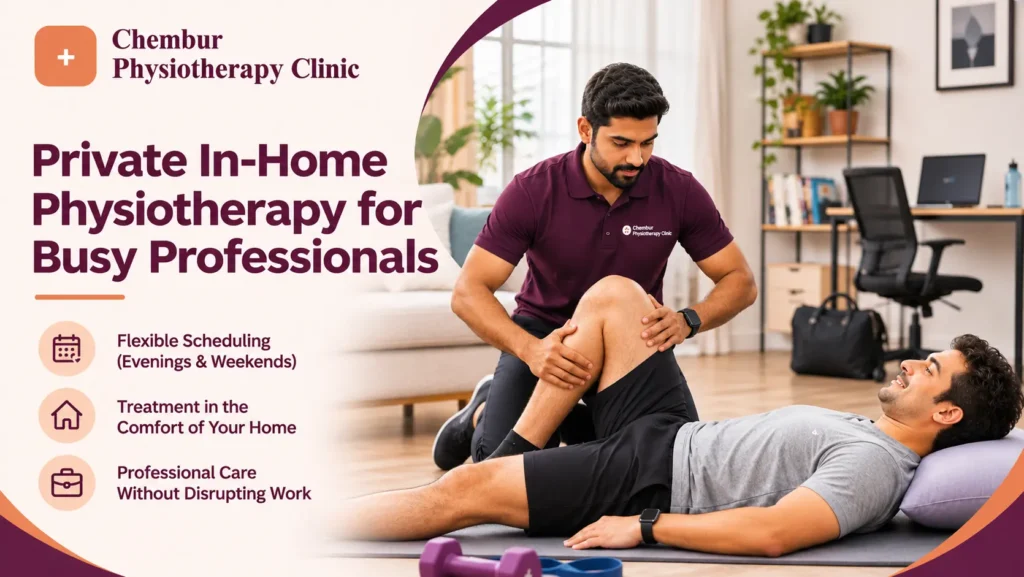
At Chembur Physiotherapy, our team guides patients through every stage of this journey, from pre-surgery preparation to a safe return to the field. Whether you are recovering from ACL surgery or supporting a family member through it, and even if you need home visit physiotherapy after surgery during the first weeks, Chembur Physiotherapy will build a plan around your goals and your surgeon’s guidance. Book your consultation with Chembur Physiotherapy today and take the first confident step towards getting back to the activities you love.