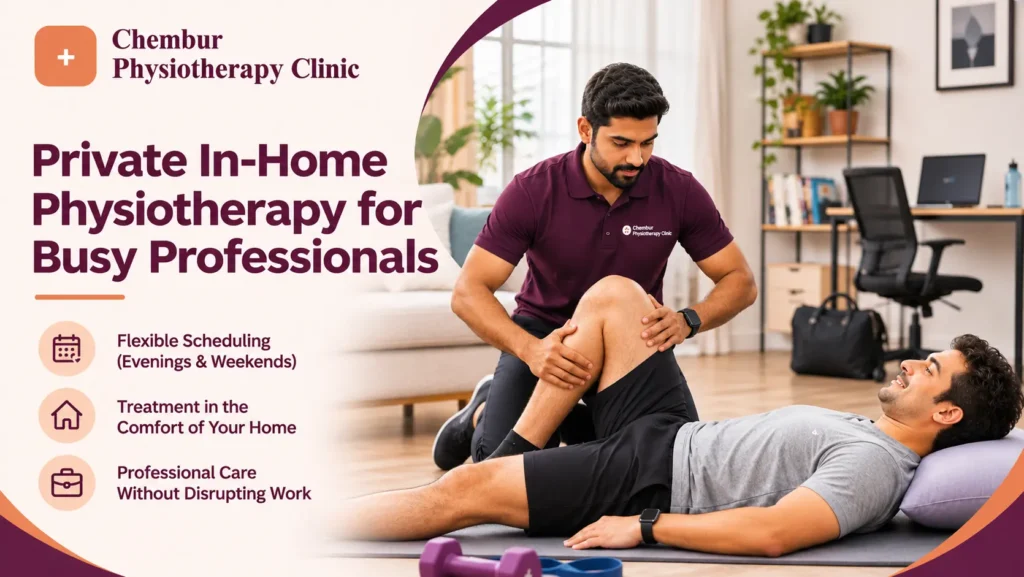
Recovering from surgery is challenging enough without the added burden of traveling to a clinic. For many patients, especially those in the early post-operative period, visiting a physiotherapy center multiple times per week isn’t practical—or medically advisable. Home-based physiotherapy eliminates these barriers while delivering professional-grade rehabilitation directly to your recovery space.
If you’ve recently undergone surgery in Chembur and are wondering what professional physiotherapy at home looks like, this guide explains exactly what to expect during a home visit and how it supports your recovery journey.
Why Home-Based Physiotherapy Matters After Surgery
Surgery marks the beginning of recovery, not the end of treatment. In the weeks and months following your procedure, structured physiotherapy is essential for restoring strength, mobility, and function. Yet traditional clinic-based therapy presents several challenges for post-operative patients:
- Limited Mobility — Fresh surgical wounds, pain, and restricted range of motion make traveling difficult
- Infection Risk — Early post-operative periods require careful wound management; clinic environments increase infection exposure
- Fatigue — Post-surgical patients tire easily; travel to and from appointments drains energy needed for healing
- Convenience — Coordinating transportation when you can’t drive or move freely adds unnecessary stress
- Continuity of Care — Seeing physiotherapy at home allows assessment in your actual living environment, identifying real-world mobility barriers
Home-based physiotherapy addresses these challenges while delivering personalized rehabilitation in the comfort and safety of your own space.
What Happens During a Home Visit Physiotherapy Session
A professional home visit physiotherapy session is far more comprehensive than simply performing exercises at home on your own. Here’s what to expect:
Initial Assessment and History Taking
Your physiotherapist will begin by reviewing your surgical history, reviewing your operation notes, and understanding your specific procedure, surgeon’s restrictions, and recovery timeline. This context shapes every aspect of your rehabilitation.
They’ll also assess your current status:
- Pain levels and pain patterns
- Swelling and wound condition (without disturbing surgical dressings if still in place)
- Current range of motion and mobility limitations
- Functional abilities (ability to walk, sit, lie down, use stairs)
- Psychological readiness and confidence in movement
- Home environment layout and safety concerns
This detailed assessment ensures your home-based program is tailored to your specific surgical procedure, current healing stage, and individual recovery trajectory.
Wound Assessment and Care
In the immediate post-operative period, your physiotherapist will:
- Observe your surgical wound (with appropriate hygiene protocols)
- Monitor for signs of infection, excessive swelling, or complications
- Advise on wound care, elevation, and protection strategies
- Coordinate with your surgeon if concerns arise
While your surgeon manages primary wound care, your physiotherapist ensures movement and rehabilitation don’t compromise healing.
Pain and Swelling Management
Post-operative pain and swelling are normal—and manageable. Your physiotherapist will:
- Apply evidence-based techniques like ice therapy, compression, and elevation
- Teach proper pain management strategies and medication timing
- Guide breathing and relaxation techniques to reduce muscle tension
- Explain the difference between normal post-operative discomfort and pain requiring surgical review
- Progress movement strategies as swelling decreases
Effective pain management early accelerates overall recovery and improves adherence to rehabilitation.
Range of Motion Restoration
One of the primary goals after surgery is restoring movement. Your physiotherapist will:
- Perform gentle, passive range of motion exercises (where they move your joint through its available range)
- Progress to active-assisted exercises (where you actively participate with assistance)
- Advance to active range of motion exercises (where you perform movement independently)
- Teach safe self-mobilization techniques you can perform multiple times daily
- Progress mobility gradually according to your surgeon’s protocols and tissue healing timelines
For knee surgery, this might involve gentle knee bending and straightening. For shoulder surgery, it might include pendulum exercises and progressive arm elevation. For hip surgery, it might focus on gentle hip flexion and abduction within safe ranges.
Strength and Muscle Activation
Post-operative muscle atrophy begins immediately after surgery. Your physiotherapist will:
- Begin with gentle muscle activation exercises (isometric contractions where muscles tighten without joint movement)
- Progress to active strengthening within safe ranges
- Target muscles that stabilize your surgical joint
- Build strength in supporting musculature to protect healing structures
- Gradually increase resistance and complexity as healing progresses
For post-ACL reconstruction, this might involve quad sets and hamstring activation. For hip replacement, it might include glute sets and progressive hip abduction. For rotator cuff repair, it might focus on scapular stabilization and gentle rotator cuff activation.
Balance and Proprioception Training
Surgery disrupts your body’s sense of joint position and movement. Your physiotherapist will:
- Begin with static balance work (standing or sitting safely with support)
- Progress to dynamic balance exercises (controlled movement with appropriate support)
- Incorporate proprioceptive training to restore your body’s awareness
- Ensure confidence and safety with every progression
- Prepare you for functional activities like walking and stair negotiation
Functional Mobility Training
The ultimate goal of post-operative physiotherapy is returning to activities you value. Your physiotherapist will:
- Coach you through walking with proper posture and gait mechanics
- Teach safe stair negotiation (if applicable to your recovery)
- Guide safe transitions (sit-to-stand, lying-to-sitting, getting in and out of bed)
- Practice functional activities relevant to your lifestyle
- Build confidence in real-world movement
For example, if you spend time sitting at a desk, your physiotherapist ensures you can safely transition to and from that position. If you need to climb stairs at home, they’ll coach you through that specific challenge.
Exercise Program Design and Instruction
Your physiotherapist won’t just perform techniques; they’ll teach you how to maintain progress between visits. This includes:
- Demonstrating exercises tailored to your current phase of healing
- Ensuring you understand proper technique and safety
- Providing written or video instructions you can reference
- Explaining the purpose of each exercise and why it matters
- Progressing your home program as healing advances
- Checking your exercise technique at each visit to ensure continued safety
Most post-operative patients require daily home exercises between professional visits. Your physiotherapist ensures you understand exactly what to do, how to do it safely, and why it matters.
Advice on Activity and Lifestyle
Beyond specific exercises, your physiotherapist offers practical guidance:
- What activities are safe at your current recovery stage
- When to progress activities (and what “too much” looks like)
- How to manage pain if it increases with activity
- Sleep positioning and comfort strategies
- Return-to-work considerations
- Timeline expectations for recovery milestones
Home Visit Physiotherapy by Surgical Type
The focus and progression of home-based physiotherapy varies significantly by surgical procedure:
Post-ACL Surgery Rehabilitation
Post-surgery rehabilitation for ACL reconstruction in your home focuses on early range of motion restoration, quad strengthening, and gradual proprioceptive retraining. Your physiotherapist ensures you progress safely through early protective phases before advancing to more dynamic training.
Post-Hip and Knee Replacement
Home-based rehabilitation after joint replacement requires careful attention to movement precautions (especially hip replacement, which has specific positioning restrictions). Your physiotherapist ensures your home environment supports safe recovery and coaches you through weight-bearing progression.
Post-Spine Surgery Recovery
Spine surgery rehabilitation demands careful movement control and progressive core stabilization. Your physiotherapist monitors for complications while gradually restoring spinal stability and function.
Post-Rotator Cuff Repair
Rotator cuff surgery rehabilitation requires meticulous progression of shoulder mobility and strength. Early phases prioritize protection and gentle range of motion, gradually advancing to functional strength and return to upper-body activities.
Post-Fracture Recovery
Fracture rehabilitation at home focuses on progressive mobilization as bone healing allows. Your physiotherapist coordinates with your orthopedic surgeon to ensure rehabilitation aligns with bone healing timelines.
The Advantages of Home-Based Post-Operative Physiotherapy
Personalized Environment
Your physiotherapist sees your actual living space—stairs, doorways, bathrooms, bedroom. They can identify barriers to recovery and suggest real-world modifications. They teach you exercises using equipment and furniture you actually have, not generic clinic setups.
Reduced Infection Risk
Especially in early post-operative phases, avoiding crowds and clinic environments reduces infection exposure. Your physiotherapist comes to you with clean equipment and proper hygiene protocols.
Better Adherence
Home-based physiotherapy has higher adherence rates than clinic-based therapy. Without travel barriers, patients are more likely to attend sessions and maintain consistent home exercise programs.
Continuity of Care
The same physiotherapist typically provides ongoing care, building deep familiarity with your recovery progress and adapting your program accordingly.
Psychological Support
Recovery from surgery involves emotional challenges alongside physical ones. Your physiotherapist provides encouragement, celebrates progress, and normalizes recovery experiences. Regular contact with a qualified professional reduces anxiety and builds confidence.
How Many Sessions Do You Need?
Post-operative physiotherapy duration varies by procedure:
- ACL Reconstruction — Typically 12–16 weeks of regular physiotherapy
- Hip or Knee Replacement — Usually 8–12 weeks of post-operative rehabilitation
- Rotator Cuff Repair — Often 12–16 weeks given the delicate nature of shoulder healing
- Spine Surgery — Typically 8–12 weeks depending on surgical approach
- Fracture Fixation — Usually 6–12 weeks depending on fracture type and location
Your physiotherapist will establish a schedule aligned with your healing timeline and recovery goals. Many patients begin with 2–3 sessions per week in early phases, reducing frequency as independence increases.
Preparing Your Home for Physiotherapy Sessions
To maximize your home-based physiotherapy experience:
- Clear Space — Ensure your physiotherapist has room to work safely with adequate floor space
- Comfortable Positioning — Have a bed, chair, and potentially exercise mat available
- Quiet Environment — Minimize distractions during your session
- Support Person — Consider having a family member present who can learn your exercises and help you practice
- Medical Documents — Have your surgery report and surgeon’s restrictions easily accessible
- Questions Ready — Prepare questions between sessions to make most of your time together
Getting Home-Based Physiotherapy After Surgery in Chembur
If you’ve recently undergone surgery and want professional-grade rehabilitation in the comfort and safety of your own home, home visit physiotherapy is an excellent option. Your physiotherapist will work within your home environment to restore strength, mobility, and confidence—all while coordinating carefully with your surgeon to ensure safe, appropriate progression.
The early weeks and months after surgery are critical for long-term outcomes. Professional guidance during this period dramatically improves your recovery trajectory and final functional outcomes.
Conclusion
Home-based physiotherapy after surgery represents personalized, professional rehabilitation delivered where you heal—your own home. At Chembur Physiotherapy, we specialise in comprehensive post-operative rehabilitation through home visits, bringing expert assessment, evidence-based treatment, and ongoing support directly to your recovery space.
Whether you’re recovering from knee replacement, hip surgery, ACL reconstruction, spine procedures, rotator cuff repair, or fracture fixation, our physiotherapists design individualized programs tailored to your specific procedure and recovery timeline. We manage pain, restore mobility, rebuild strength, and rebuild your confidence in movement—all while respecting your surgeon’s protocols and your body’s healing needs.
If you’ve had recent surgery in Chembur, don’t navigate recovery alone. Contact us today to schedule your home-based physiotherapy assessment and begin your path to full recovery.